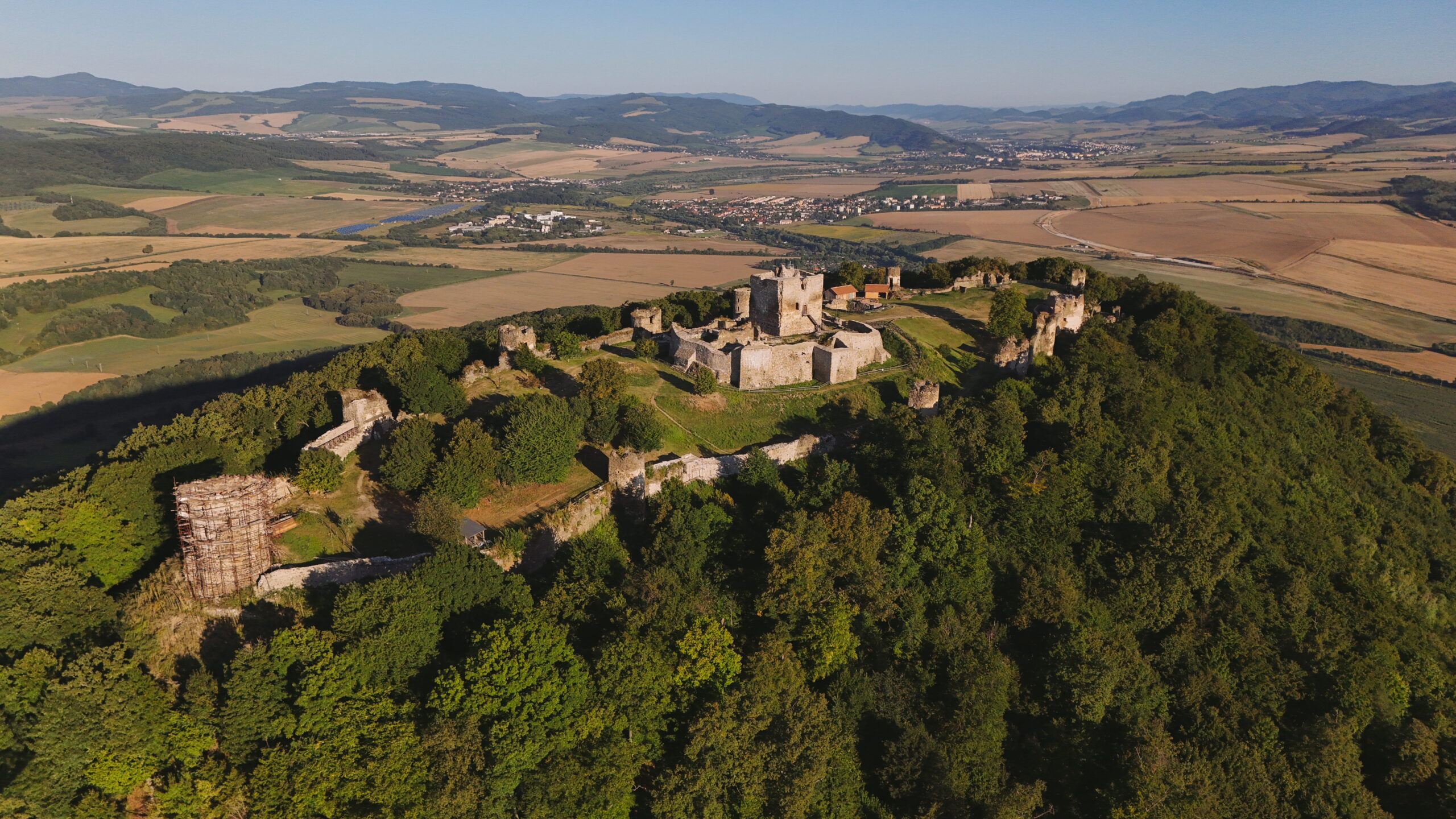
The first mention of the village Pečovská Nová Ves dates back to 1319 (Wyfalu). This historically important village was already the seat of noblemen in the Middle Ages, but it was not until the beginning of the modern period that it became the centre of an estate, which necessitated the construction of a landowner's residence. Until 1322 it was a royal property, then it and its surroundings were owned by the nobleman Mičko, who built his mansion high in the Čergov Mountains. Through marriages, other families who occupied manor houses and curonias in the village, be it the Pécha, Mariássy or Bornemisz families, came to Pečovská Nová Ves. Thanks to them, Pečovská Nová Ves is extremely rich in monuments and historical buildings. In addition to the Baroque church, the Classicist synagogue and the chapel, there are more than 10 mansions and manor houses, which can be rivalled in Slovakia only by the municipalities of Liptovský Ján or Brezovica. Such a concentration of monuments is unique for rural
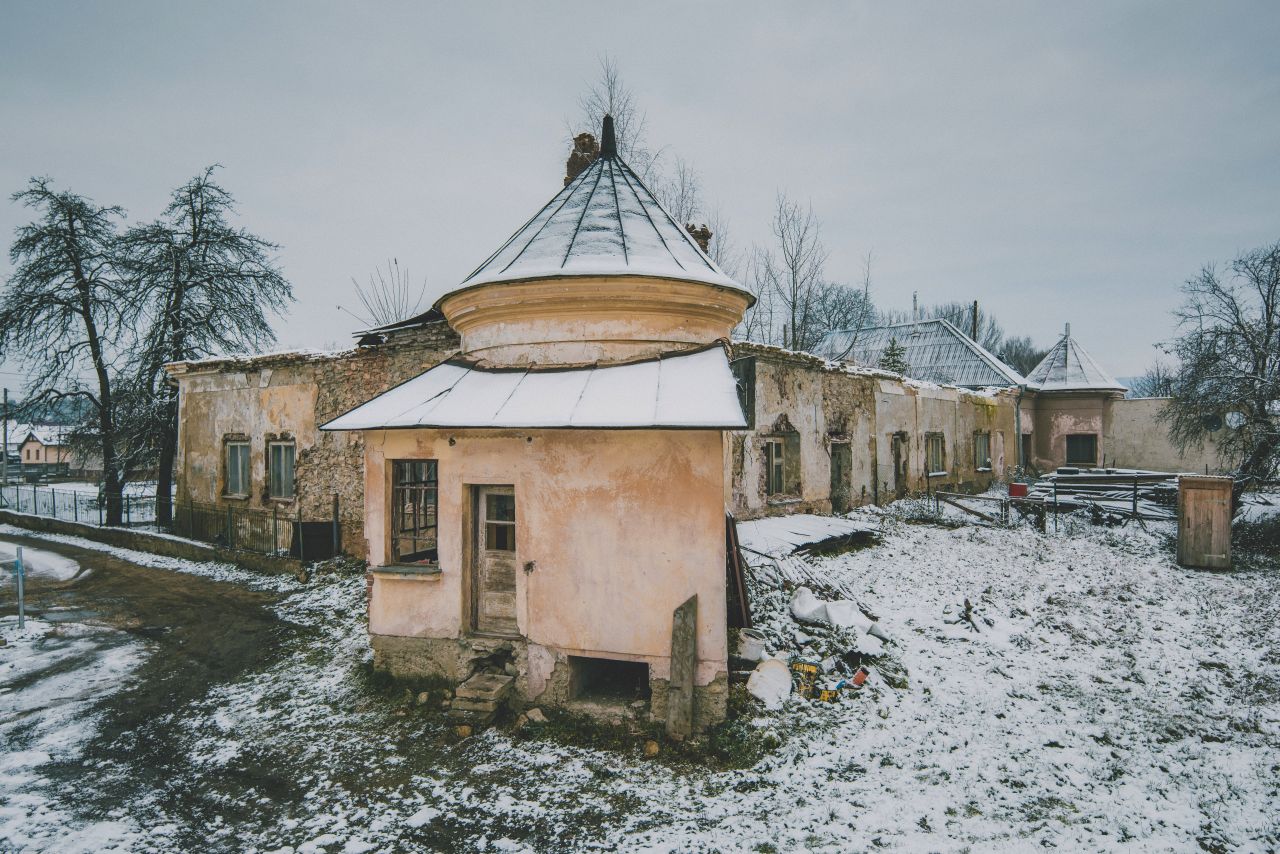
One of the largest manor houses in the village of Pečovská Nová Ves is the so-called Koneiser (Kornhaizer) manor house, known in the village by its last owner - the Jew Adolf Kornhaiser (popularly „koneizer“).
The manor house (before nationalisation) has not been the subject of any research so far, therefore dating its construction is rather difficult. It is evident that the present manor house has an older core, which consisted of a building with a rectangular plan and two corner round towers and dates from the beginning of the 17th century. In addition to its layout, the construction of the manor house (already in the 17th century) is evidenced by a number of architectural details: Renaissance vaults in the basement and stonework in the above-ground part with regular lines. In view of the fact that other distinctly rebuilt parts of this part can be dated to the Baroque period. It is likely that the original building dates back at least to the late Renaissance. The two-tower, single-storey late Renaissance mansion was subsequently rebuilt in Baroque style before 1755. This construction phase is evidenced not only by the large number of elements from this period, but especially by the date on the portal vault (now bricked up). In the first half of the 19th century, a classical wing was added to its north-west corner. The initiators of the construction of the manor - the Peči family, owned the building until the beginning of the 20th century. The last owner of the whole building was a Jew, Adolf Kornhaiser, who bought it from the heirs of the last owner of the Peci family - Ladislav. The manor house was popularly named after Kornhaiser's surname and distinguished from the nearby Ring manor house. After 1918, its contemporary condition is also known: it was in its original appearance on the outside (apparently unrepaired for a long time) and rebuilt on the inside, divided into many small flats. The immediate surroundings of the manor were also owned by Kaufer and Karp, owners of Jewish origin, in the interwar period and lost their property during the Slovak state. In the 1950s the building was divided among several owners, and in the 1960s and 1970s it was extensively repaired. Before this inappropriate alteration, the manor belonged to a nice park, a fence, it had historic doors, many nice frescoes; its large room was used by the village as a dance hall. In addition to bricking up and removing many architectural details, other brick buildings were added to the cylindrical corner towers. There is also an original basement beneath the original rectangular Renaissance manor house. The individual spaces of the basement are covered by vaults with lunette lintels. The core of the ground floor of the oldest part of the manor house consists of a structural longitudinal double-tract (west and east) with two cylindrical towers on the NE and SE corners. Much of the room has plain modern ceilings, but these have only been lowered and the Prussian vaults above survive. In the eastern part is a large hall space with two bays of Prussian vaulting with arched bands. Both fields of vaulting are decorated with stucco ornaments (stucco oval frames with a 5-step cornice arched stucco on the outer perimeter). The original corner towers also have secondary vaults - Bohemian plaques with stucco decoration at the top.
Source: village Pečovská Nová Ves (Village Pečovská Nová Ves - travels through history)
Map
Gallery