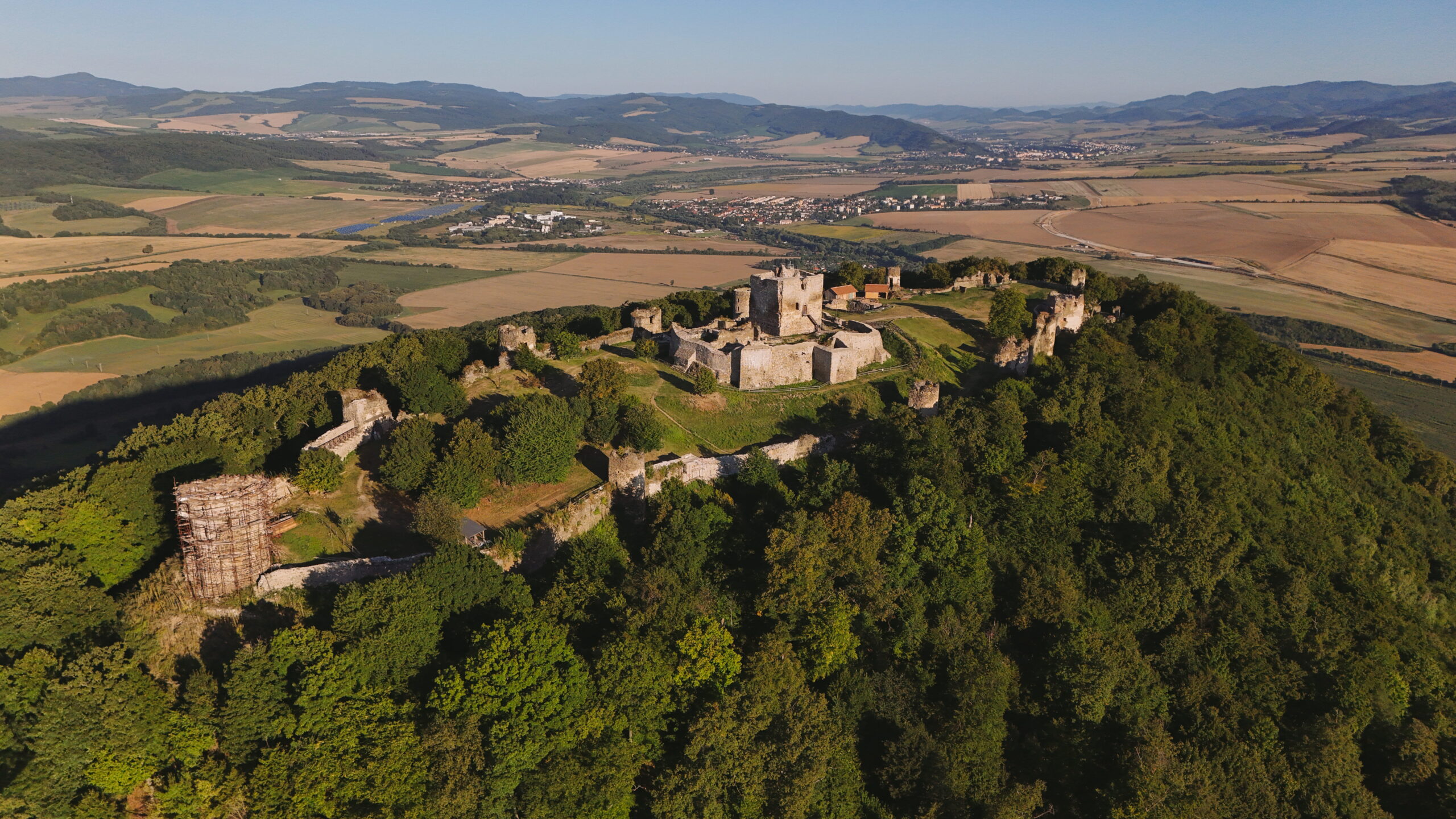

Ruins Sokoľ Castle is hidden in the woods above the village of Sokoľ, on a hill known as Hradová or Hrádek. The village, first mentioned as early as 1270, historically belonged to the Šariš County. Although little remains of the former castle, its history dates back to the 13th century and is linked to royal hunting expeditions, the Tatar invasion and trade on the River Hornád.
The origins of the castle
The circumstances surrounding the castle’s origins remain unclear to this day. According to one theory, its foundation is linked to the king’s falconry expeditions. Another theory links it to the period following the Tatar invasion of 1241, when stone castles were being built on a large scale in Hungary, particularly in hard-to-reach terrain. In terms of its type, layout and architecture, Sokoľ is classified as an early Gothic castle from the second half of the 13th century. Due to its secluded location in the mountains, it had no strategic significance; rather, it served as a refuge for local landowners and the population in the event of a return by the Mongol armies. Castles in Obišovce, Skároš and Slanské hills.
The History of the Castle
The first known written reference to the castle dates from 1299. A charter from 1311 lists it as one of the border castles of the Čierna hora mountain range. In 1405, King Sigismund declared it a royal castle, and in 1423 he bestowed it upon Matúš and Imrich of Pavlovce. The castle was the centre of the Sokoľ estate, which included several surrounding villages, such as Kostoľany nad Hornádom, Tepličany, Rokycany, Ružín, and Malá and Veľká Lodina. The castle was also significant from a commercial perspective, as tolls were levied in the village of Sokoľ on timber floated down the Hornád on rafts.
In 1429, King Sigismund donated the castle to the town of Košice on condition that it be demolished. The castle was probably burnt down and partially demolished to prevent bands of outlaws from taking up residence there. As early as 1440, it is mentioned as a ruin.
The ruins of the castle
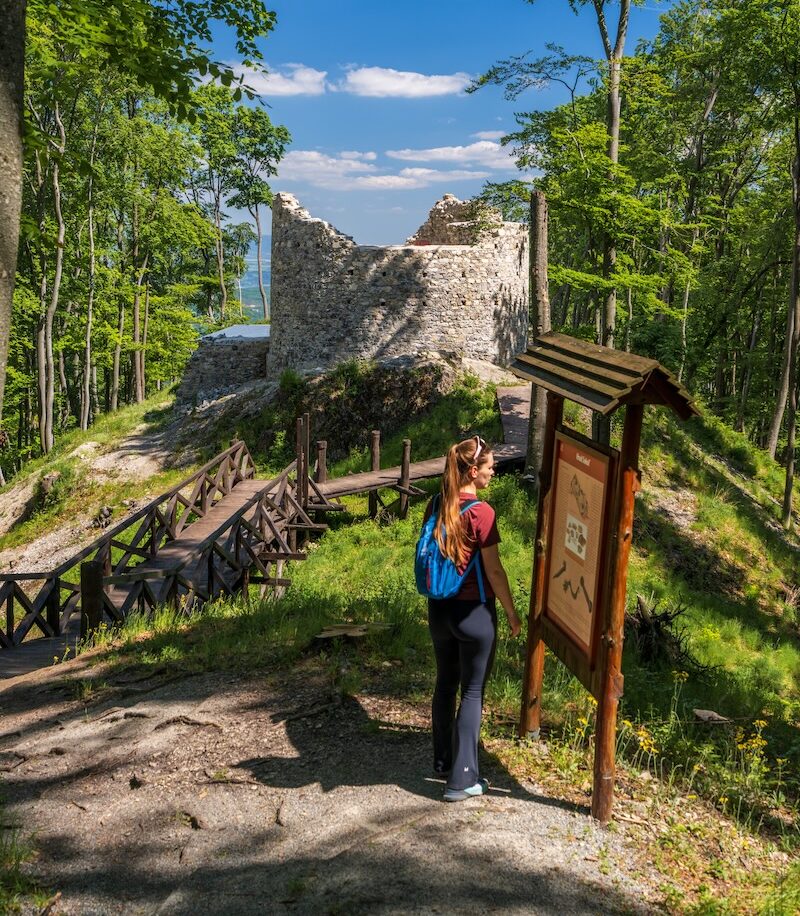
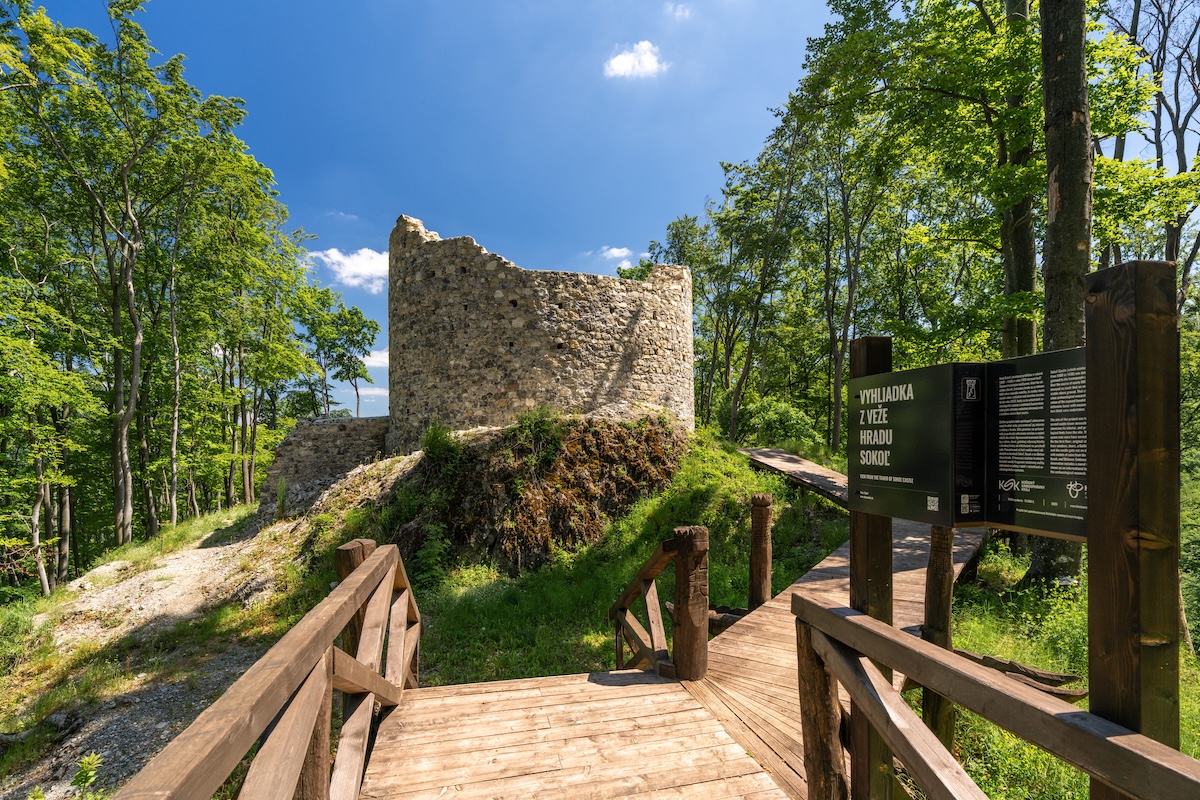
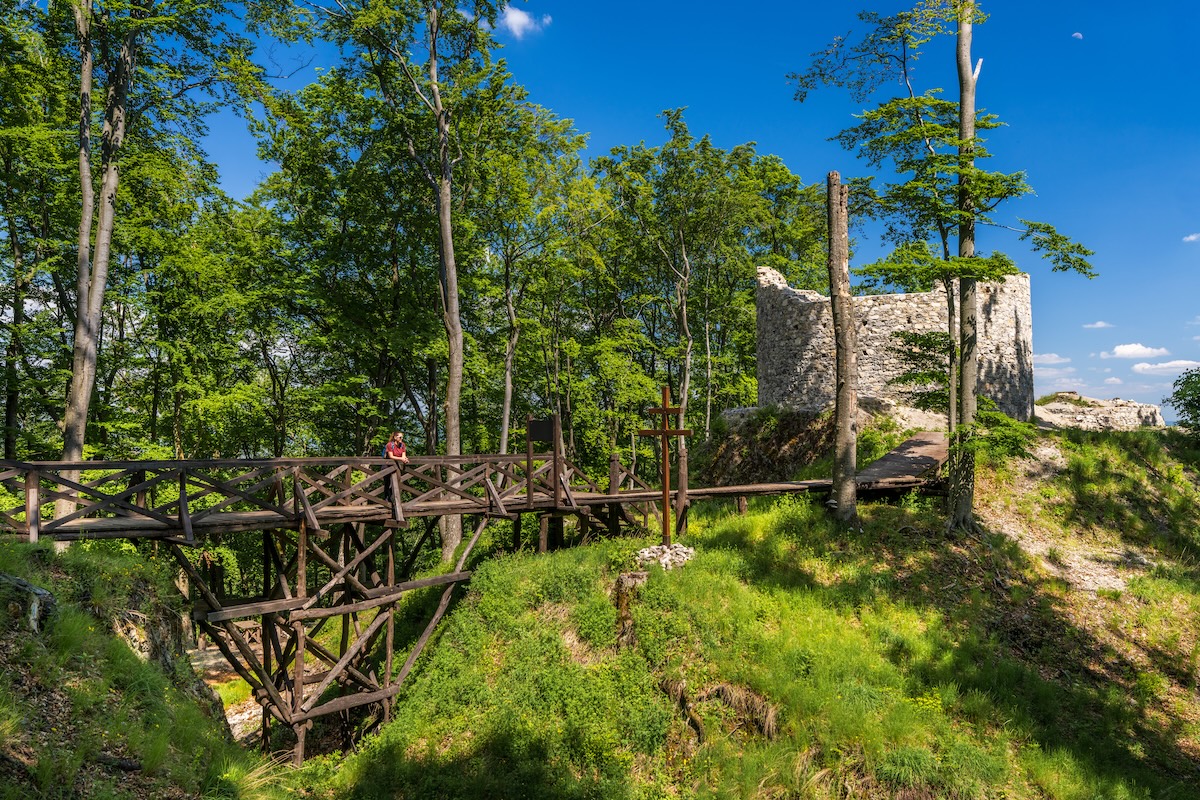
Judging by the surviving remains, it was a small fort with a watchtower and a castle palace. A medieval well is still visible in the courtyard today. The castle was probably home to falconers who bred and trained falcons for royal hunts. Today, the site is almost entirely engulfed by the forest, and the castle is now little more than an inconspicuous earthwork, the remains of stone walls and, most notably, a distinctive moat.
The Castle Cave
About 10 to 12 metres below the castle, on the north-eastern slope, lies the Castle Cave, which is approximately 27 metres long. It is a combination of a natural cave and an artificially excavated adit, which runs roughly beneath the centre of the castle, towards the tower. It probably served as a cellar. In the winter months, it provides a refuge for bats.
The castle today
The castle ruins and the cave beneath the castle are currently looked after by the village of Sokoľ and the Dedinka Citizens’ Association. The castle grounds have been landscaped and feature benches, a viewing point, a double cross and an information board detailing the castle’s history. An educational trail called ‘To the King’s Well’ leads to the castle; it starts in the centre of the village by the bus stop and is marked with orange arrows. The route is easy and suitable for a short family outing.
In the surrounding area
There is a viewing point near Sokoľ Castle Jánošík’s Bastion, ruins Kysacký’s a Obišov Castle or the Košice Zoo in Kavečany.
Source: OOCR RŠ
Source of photographs: OOCR RŠ
Map
Gallery
Information
Zrúcanina hradu Sokoľ sa nachádza v lesoch nad obcou Sokoľ. Malý ranogotický hrádok vznikol pravdepodobne v druhej polovici 13. storočia ako útočisko pred Tatármi alebo v súvislosti s kráľovskými poľovačkami so sokolmi.
Prvá písomná zmienka pochádza z roku 1299. V roku 1429 daroval kráľ Žigmund hrad Košiciam s podmienkou jeho zrúcania a v roku 1440 sa už spomína ako ruina. Dodnes sa zachovala najmä hradná priekopa, val a stredoveká studňa.
Pod hradom sa nachádza približne 27 metrov dlhá Hradná jaskyňa, ktorá slúžila pravdepodobne ako pivnica. Upravený areál s lavičkami a informačnou tabuľou je dostupný po náučnom chodníku Ku Kráľovej studni z centra obce Sokoľ.