Did you know that the selfie stick was invented in Šariš? That’s because there are plenty of sights to see on your own there, and finding someone to take a photo of you is quite a challenge.
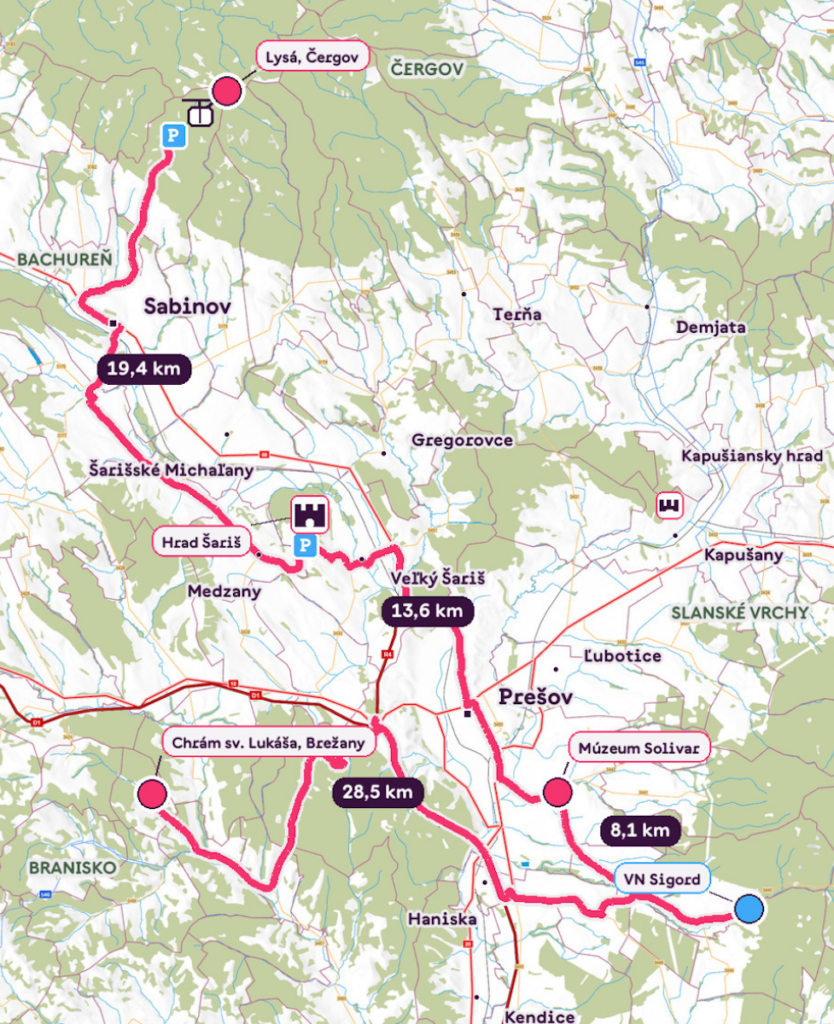
The challenge, however, is not to enjoy the most interesting sights and the most breathtaking views in peace and without the crowds. Be inspired by the legend of The wealthiest man in the Šariš region and follow in the footsteps of the filming of our new videos, which are part of rebranding to mark the 10th anniversary of OOCR Šariš Region. The route is a journey into nature, history, History a religions the Šariš region, so there’s certainly something for everyone there.
The Wild Nature of Čergov
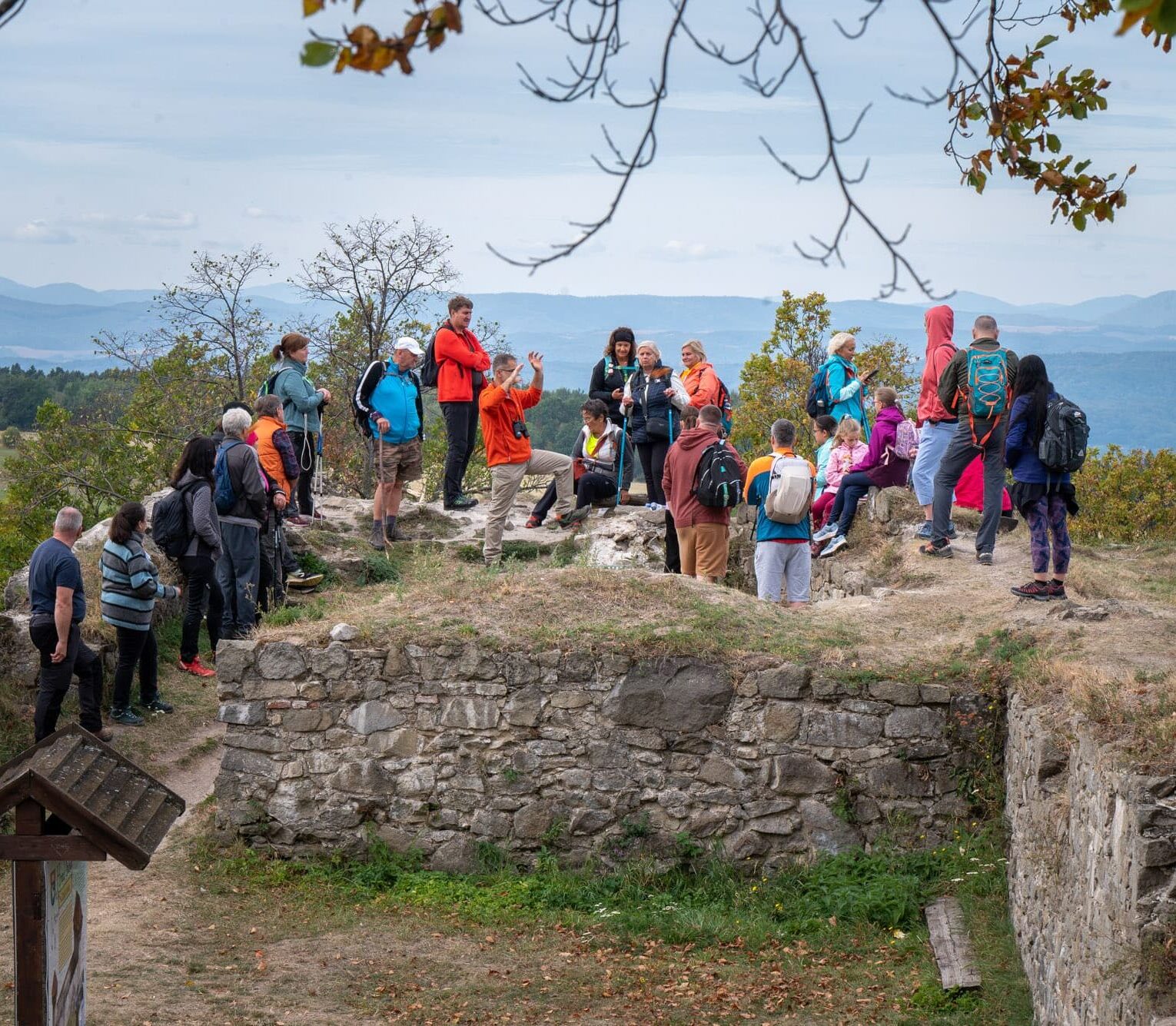
We’re starting off with a wild one the Čergov Mountains, which is one of the Šariš region’s hidden gems, with unspoilt nature and panoramic views. A popular tourist destination is the hill Lysá, which is one of the highest peaks in the Čergov Mountains. The easiest way to get there is from the village of Drienica and you can park at the lower station of the cable car to Lysá. The chairlift only runs at weekends, but you can easily make the ascent on foot. You’ll be rewarded with beautiful views, and on a clear day you can enjoy lunch here whilst looking out over the High Tatras. You can then continue along the nature trail Baranie – Čergov, where you will find, for example, a place shrouded in legends and tales – a solitary, massive, prism-shaped sandstone boulder with sheet-like layering, known as the ‘Altar Stone’. It is an ancient historical monument, a silent testament to the cult practices of our ancestors and a refuge for believers persecuted for their religious convictions. Today, a wooden chapel dedicated to the Transfiguration of the Lord stands here; it belongs to the Drienica Greek Catholic parish and services are held here once a year. You can continue on to the Črchľa pass, which forms part of the Čergov Site of Community Importance and Special Protection Area. The trail continues to the settlements of Ambrušovce and Baranie, which were abandoned in the 1960s; scattered wooden houses and memorials in the cemetery bear witness to this. These were scattered settlements in the Čergov valleys, whose inhabitants made their living from farming, forestry, charcoal burning, and the production of shingles and troughs. As you leave, don’t miss the Starý lom via ferrata, which is situated just a few dozen metres below the car park by the cable car. At the site of the former quarry, you’ll find several ladders and chains leading to a small bridge offering views of Lysá. You can return via the same route or along a forest track.

The Heart of the Region – Šariš Castle
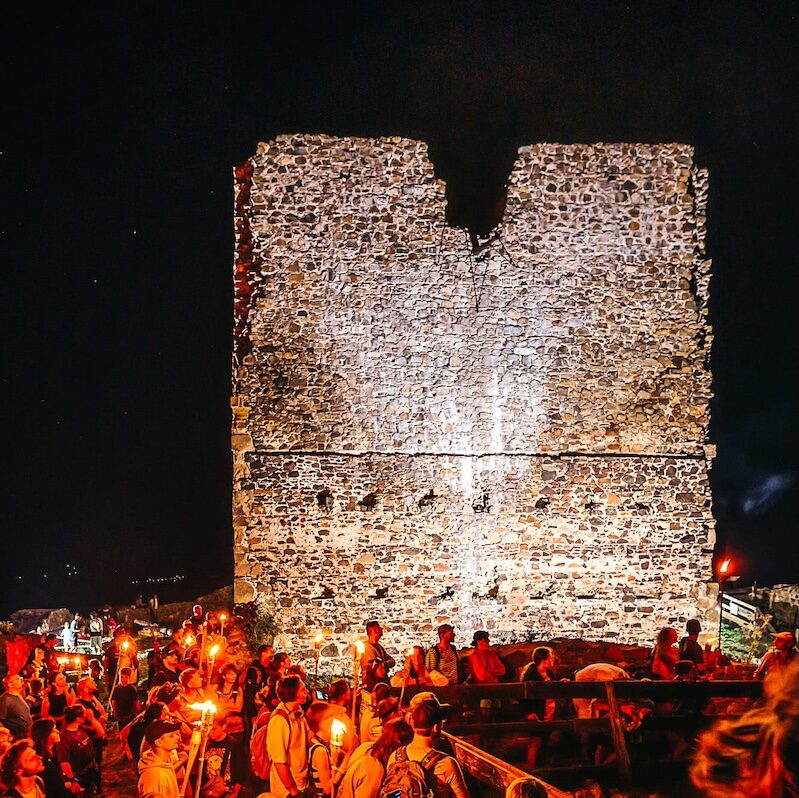
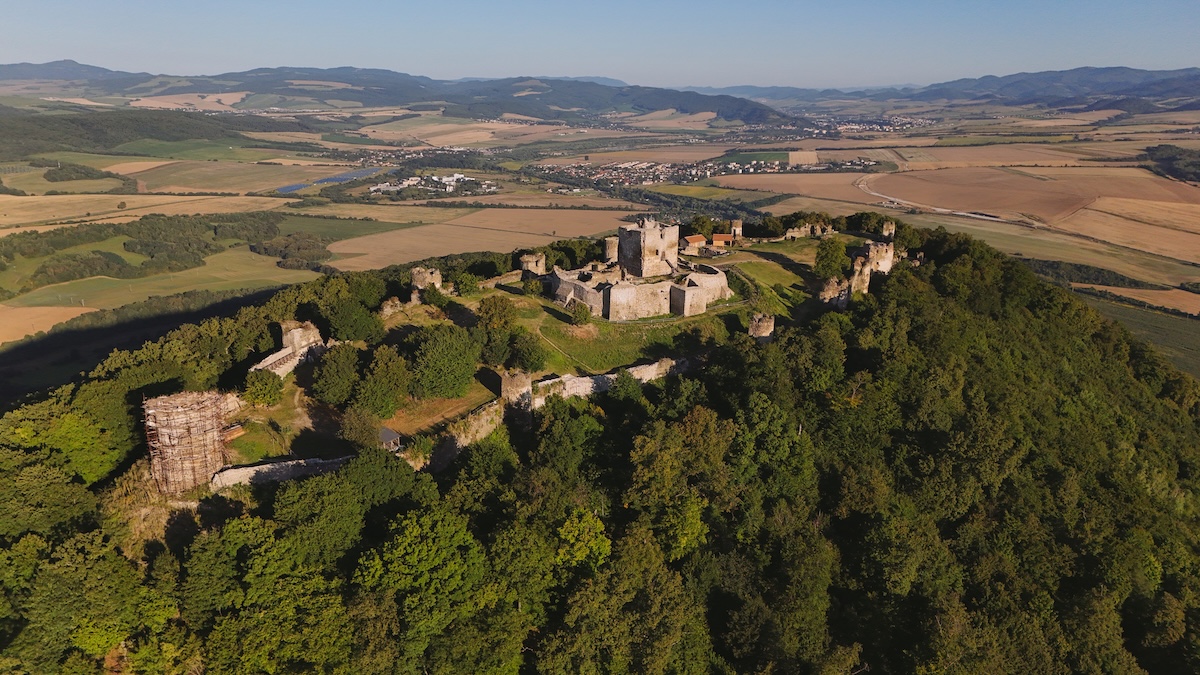
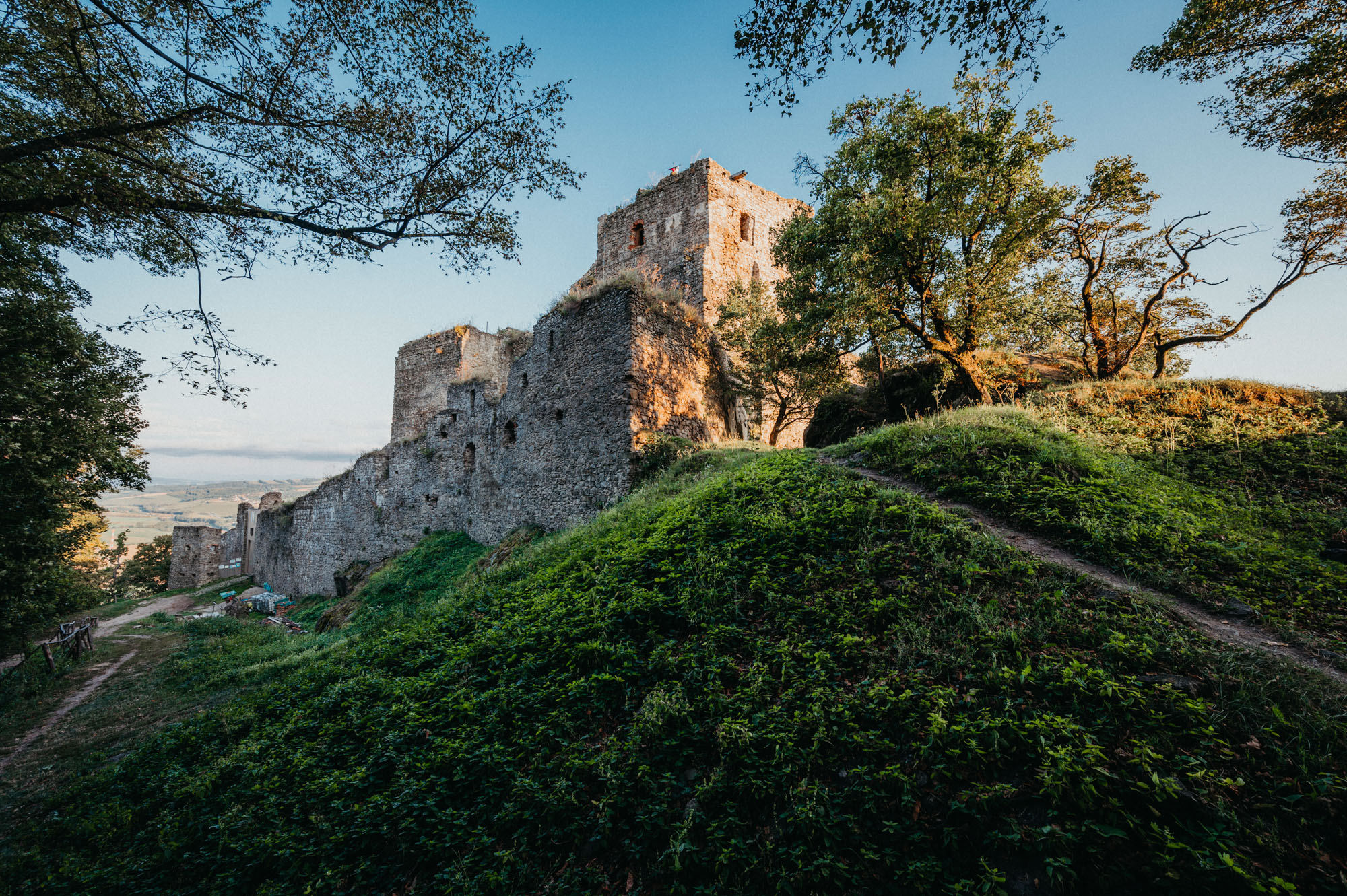
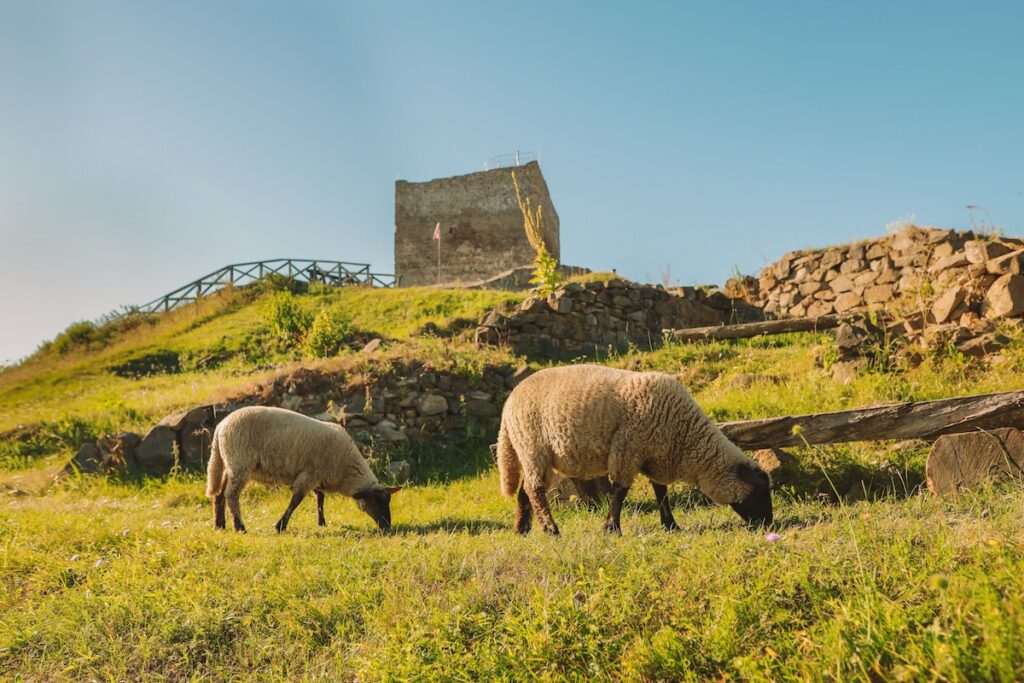
From the wild Čergova We are heading to a place that is a symbol of the entire region, to Šariš Castle. This 13th-century royal castle was a county castle. Unlike the neighbouring guard castles, its role was to control important regional and trade routes leading to Spiš and Poland, but particularly the route through the Torysa Valley. Over the centuries, it came into the possession of several prominent noble families and also played an important role during the battles against the Turks. Throughout its history, the castle was visited by several Hungarian kings, including Béla IV and Matthias Corvinus. Later, it gradually lost its significance and began to fall into disrepair following an explosion caused by gunpowder. The castle’s most striking features are its 14 bastions and the reconstructed Donjon tower, from which, on a clear day, you can enjoy views across the entire region, including three neighbouring castles and three neighbouring countries. The castle is open daily, and from Tuesday to Sunday you can also take advantage of guided tours that include a climb up the Donjon. You can park in the car park below the castle and reach it in an hour by following the yellow trail. The path leads through the forest and is moderately challenging, but is also suitable for families with children.
The history of salt mining
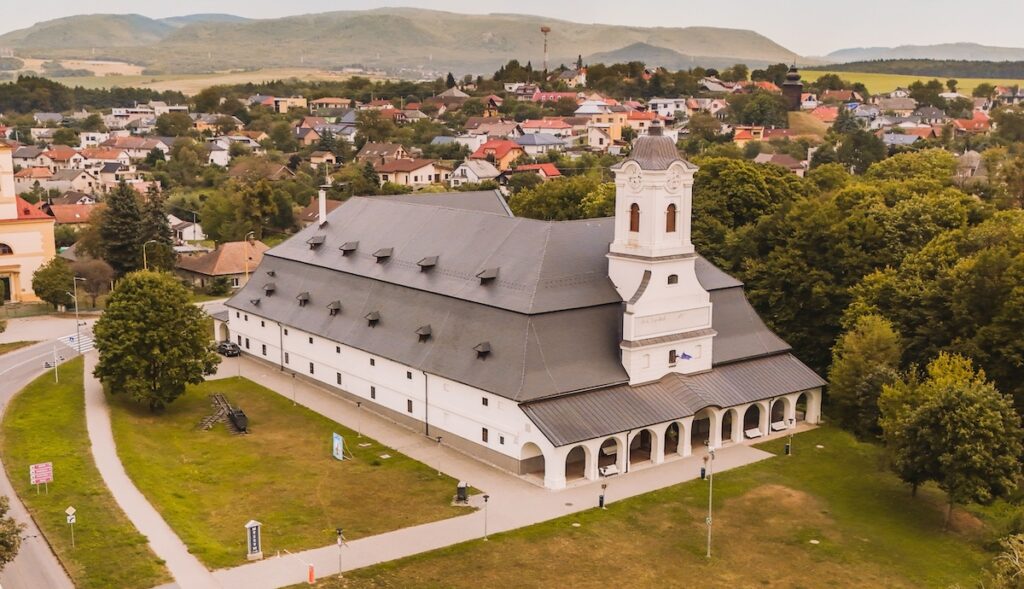
We shall continue our exploration of history, but this time a few centuries later. We are moving on to Solivar, home to a national cultural monument – a unique complex of technical structures for extracting and boiling salt from brine. Dating back to the 17th century, it ranks among the most significant technical monuments in Slovakia. Here you’ll discover a wealth of interesting information about the extraction, production, processing and use of Prešov salt. This unique site is protected as the Soľná Baňa heritage zone and features several technical monuments, such as the Leopold shaft with its foreman’s building, the sorting house, the smelting works, the boiling house, the salt store, the blacksmith’s workshops and the salt-tapping house. Some of the technical buildings are open to the public as part of the Slovak Technical Museum – the Solivar Museum; you can find its opening hours on the museum’s website. If you’d like to add a little „spice“ to your trip, carry on by bike along the Cykloželeznička cycle path all the way to the water Sigord reservoir. You can take a stroll around the lake, have a picnic here or relax whilst enjoying the view of Slanské vrchy. Don’t miss the educational trail known as the Sigordské koľečko, which you can complete at a leisurely pace in about 30 minutes. Along the route, you’ll find information boards detailing the local wildlife and a wooden bridge over the Delňa stream. The trail is suitable for families with children, leisure walkers and visitors simply looking for a short stroll in the countryside.
Wooden churches
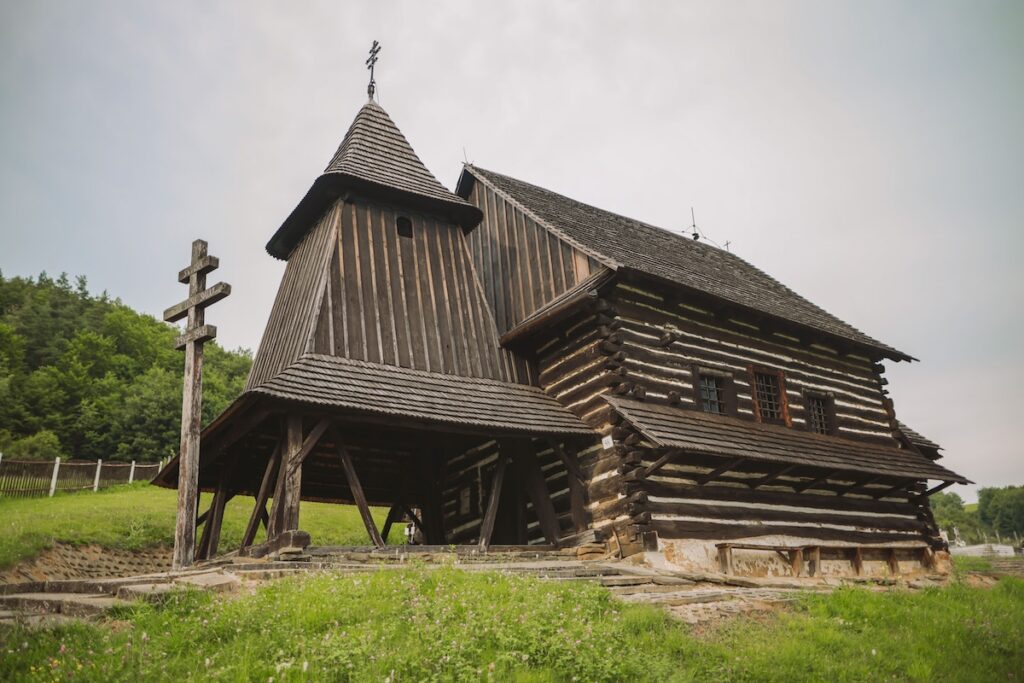
The final stop on the trail following in the footsteps of the wealthiest man from Šariš is the village of Brežany. It is situated here the wooden Greek Catholic Church of St Luke the Evangelist, which is one of the churches Carpathian Wooden Way. The church dates from 1727 and its most striking feature is the iconostasis, comprising four rows of icons dating from 1733. It is unusual in that it lacks the traditional depiction of the Crucifixion or a cross in the upper section, which is unusual in church iconography. The main Baroque altar dates from 1782 and is adorned with a painting of the Coronation of the Virgin Mary by František Ferdynandy. In the 1950s, the local congregation adopted the Roman Catholic rite and began using the church for their services, although it remained the property of the Greek Catholic Church. The church forms part of a historic cemetery, where graves and crosses dating back over a hundred years can be found. In the Šariš region, you can also find other small wooden churches, such as: The UNESCO-listed wooden church of St Michael the Archangel in Ladomírova, The wooden church of the Protection of the Most Holy Mother of God in Hunkovce, the wooden church of St Nicholas in Bodružal, the wooden church of St Paraskeva in Svidník, the wooden church of St Dimitrius the Great Martyr of Thessaloniki in Medveď, and the wooden Greek Catholic church commemorating the Meeting of the Lord with Simeon in Kožany.
So what is it that makes a Šarišan truly rich? It is not chests full of gold, nor riches hidden behind castle walls. His wealth lies in the places, stories and experiences that cannot be measured in money. The view from Lysej, hidden within the walls for centuries Šariš Castle, salt, which made Prešov famous, peace at Sigord or the scent of wood in an ancient temple in Brežanoch – Each of the stops reveals a different side to Šariš.
So set off in the footsteps of the wealthiest man from Šariš and discover a region where you, too, can feel rich for a while. And since in many places there really might be no one around to ask to take a photo with you, you’d better not forget to pack your selfie stick. In Šariš, you’ll find that the greatest luxury is having all that beauty almost entirely to yourself.
Source: OOCR RŠ
Source of photographs: OOCR RŠ